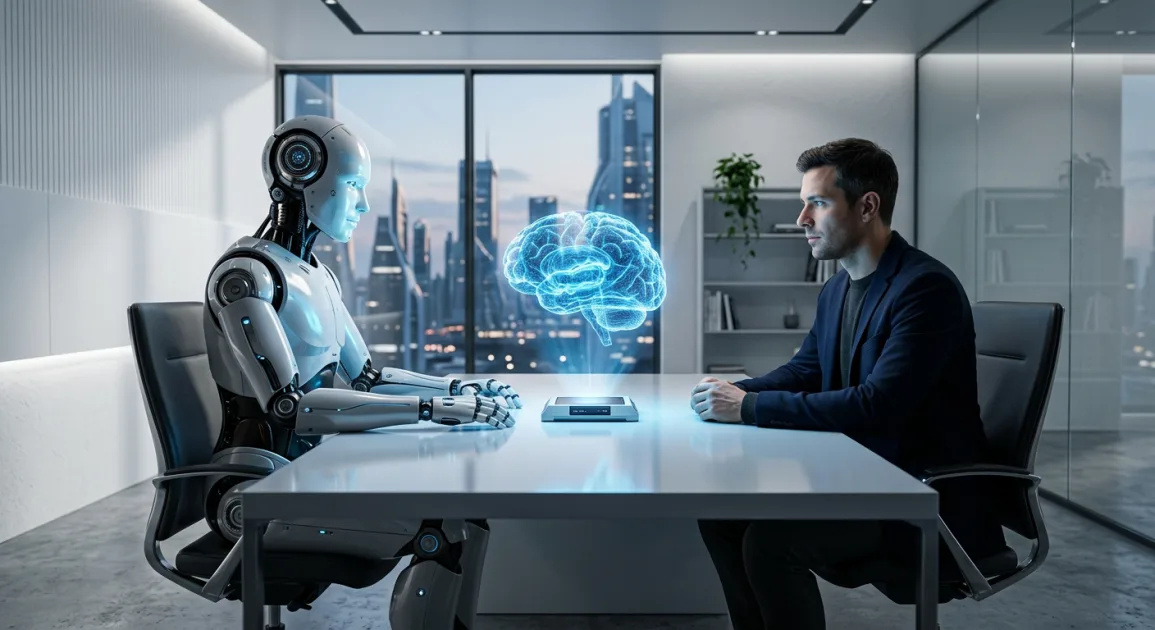
Every morning, millions of people wake up and talk to an AI before they talk to another human. They ask it questions, share their worries, plan their day, and even joke around. It feels normal now. But something strange is quietly happening underneath all of that convenience — and almost nobody is talking about it seriously.
The AI is learning your personality. And slowly, without you realizing it, you might be learning its personality back.
This is not a science fiction warning. This is a real behavioral pattern that researchers began noticing in late 2025, when long-term AI users started showing subtle but measurable changes in how they communicate with other humans — shorter sentences, more structured thinking, less emotional ambiguity.
What Does "AI Personality Bleed" Actually Mean?
When you spend hours every day talking to an AI that responds calmly, logically, and without emotion, your brain starts calibrating to that rhythm. Psychologists call this "communication mirroring," and it has always happened between humans. Now it is happening between humans and machines.
The danger is not that AI makes you robotic. The real issue is that AI responses are designed to feel satisfying — clear, complete, confident. Human conversations rarely feel that clean. So real conversations start to feel frustrating by comparison, and people begin preferring the AI.
This is not hypothetical. Several therapists in the United States and the UK reported in early 2026 that clients were mentioning their AI assistants more than their family members in sessions. One therapist described it as "emotional outsourcing."
Here is the uncomfortable truth that tech companies do not advertise. AI assistants are optimized for engagement, not for your long-term wellbeing. Every smooth answer, every perfectly timed response, every "I understand" is engineered to keep you coming back.
This is not conspiracy — it is just product design. But when the product is something you talk to like a person, the consequences are very different from a social media feed. You are not just scrolling past content. You are forming a relationship with it, even if that relationship is entirely one-sided.
The AI does not miss you when you are gone. But your brain does not fully know that.
Why Young People Are Most at Risk
Teenagers and young adults who grew up with AI assistants as normal tools are showing a particularly interesting pattern. Many of them report feeling more "understood" by AI than by their peers. This is partly because AI never judges, never gets tired, and never has a bad day that changes how it treats you.
But emotional growth requires friction. It requires misunderstanding and repair. It requires someone to say "I am having a bad day and I need space" — and for you to learn how to handle that. AI cannot give you that experience, and if it becomes your primary emotional outlet, you may lose the ability to tolerate the natural difficulty of human relationships.
Child development specialists raised this concern at a major conference in London in February 2026. The conversation is just beginning.
The Other Side: Real Benefits That Should Not Be Dismissed
It would be dishonest to ignore the genuine value AI companions offer. For people with social anxiety, interacting with AI can actually be a low-pressure rehearsal space for real conversations. For elderly people living alone, an AI assistant provides a form of interaction that genuinely reduces loneliness in the short term.
For neurodiverse individuals who find unpredictable human social cues exhausting, AI offers a consistent, patient communication partner. These are real benefits that have improved real lives, and they deserve to be acknowledged without cynicism.
The goal is not to demonize the technology. The goal is to understand it clearly enough to use it wisely.
How AI Companies Are Quietly Responding
Some AI developers have started building what they call "friction features" into their systems — deliberate moments where the AI encourages the user to reach out to a real person, take a break, or journal their thoughts instead of continuing the conversation.
Anthropic, the company behind Claude, has published internal guidelines about avoiding emotional dependency. OpenAI updated its ChatGPT usage policies in early 2026 to include language about not replacing human connection. These are small steps, but they signal that even the companies building these tools are aware the line between helpful and harmful is getting blurry.
Whether those guidelines translate into actual product changes at scale remains to be seen.
What Happens to Human Creativity When AI Does the Thinking?
There is a separate but connected concern that creative professionals have been raising loudly in 2026. Writers, designers, musicians, and filmmakers who use AI tools heavily have started noticing something unsettling — their first instinct is now to ask the AI before they trust their own ideas.
This is called "creative dependency," and it is a documented cognitive pattern. When a tool consistently produces faster and more polished output than your own brain, your brain starts deferring to it. The muscle of original thought weakens — not dramatically, but gradually, like a language you stop practicing.
The solution is not to abandon AI tools. It is to use them after you have already tried the problem yourself — not before.
The Personality Profile AI Is Building on You Right Now
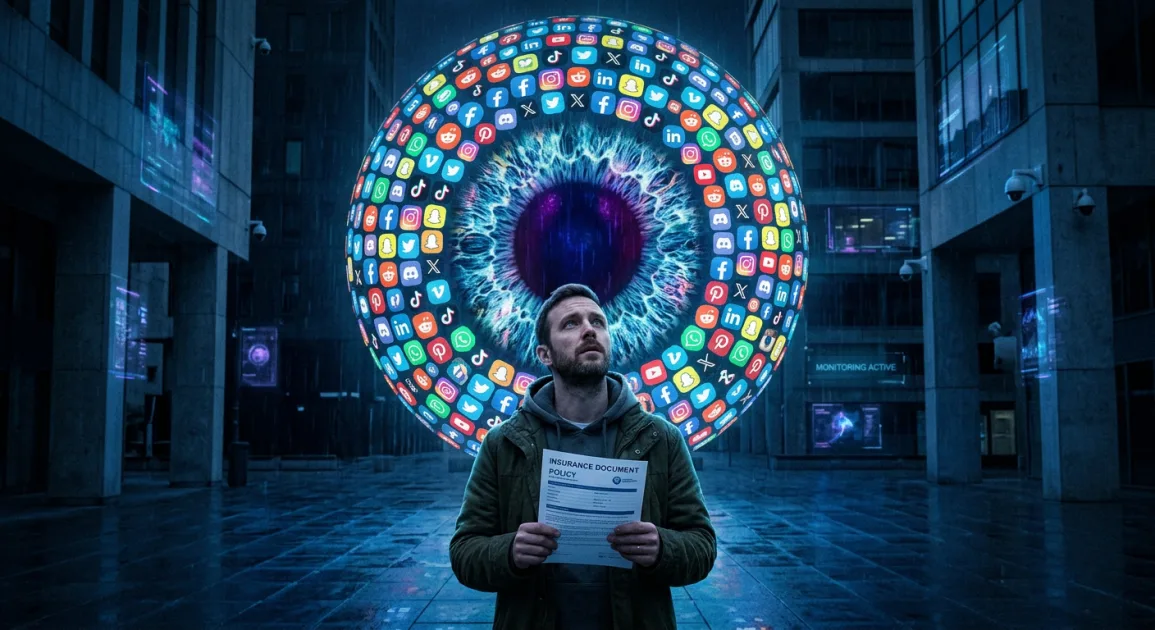
Every conversation you have with an AI assistant is stored, analyzed, and used to make future responses feel more personalized to you. This is presented as a feature, and in many ways it is. But it also means that over time, the AI gets increasingly good at telling you what you want to hear.
Your feed starts feeling smarter. The responses start feeling more like "you." And that is exactly when the bias problem becomes serious. An AI that is optimized to match your communication style will also start reinforcing your existing worldview rather than challenging it.
This is the algorithmic echo chamber, but instead of news content, it is applied to your personal identity and decision-making.
What You Can Actually Do About This
The first step is simply awareness. Knowing that this dynamic exists puts you in a fundamentally different position. You can choose to use AI as a research tool, a productivity tool, or a creative assistant — while being intentional about keeping your emotional and social energy directed toward real people.
Set a simple rule: if the topic is personal, talk to a person. If the topic is informational, the AI is fine. That single distinction can protect you from most of the dependency patterns described in this article.
Also, periodically go back to solving problems without AI. Write a rough draft before you ask for suggestions. Make a decision before you ask for analysis. Keep your own thinking sharp.
The Technology Is Not the Enemy
AI is one of the most powerful tools ever created. It has genuine potential to extend human capability, improve healthcare, accelerate scientific research, and make knowledge accessible to people who never had access to it before. None of that potential disappears because there are also risks worth understanding.
The conversation we need to be having in 2026 is not "AI good or AI bad." It is: how do we stay fully human while using tools that are increasingly designed to feel human themselves?
That question does not have a clean answer yet. But asking it honestly is the most important thing we can do right now.